
SEO Services vs. DIY: What Small Business Owners Should Know in 2026
The choice between hiring SEO services and doing it yourself depends on your budget, time, and risk tolerance. SEO services handle strategy, technical audits, and link building for a monthly or project fee, while DIY gives you full control but demands constant learning and execution. This guide breaks down the real trade-offs for small businesses in 2026.
If you run a small business or freelance operation, you’ve probably wondered whether to pay for professional SEO services or tackle search engine optimization yourself. Both paths can work, but they lead to very different journeys. By the end of this post, you’ll know exactly which route fits your situation and how to avoid the costly mistakes beginners make.
What Do Professional SEO Services Actually Include in 2026?
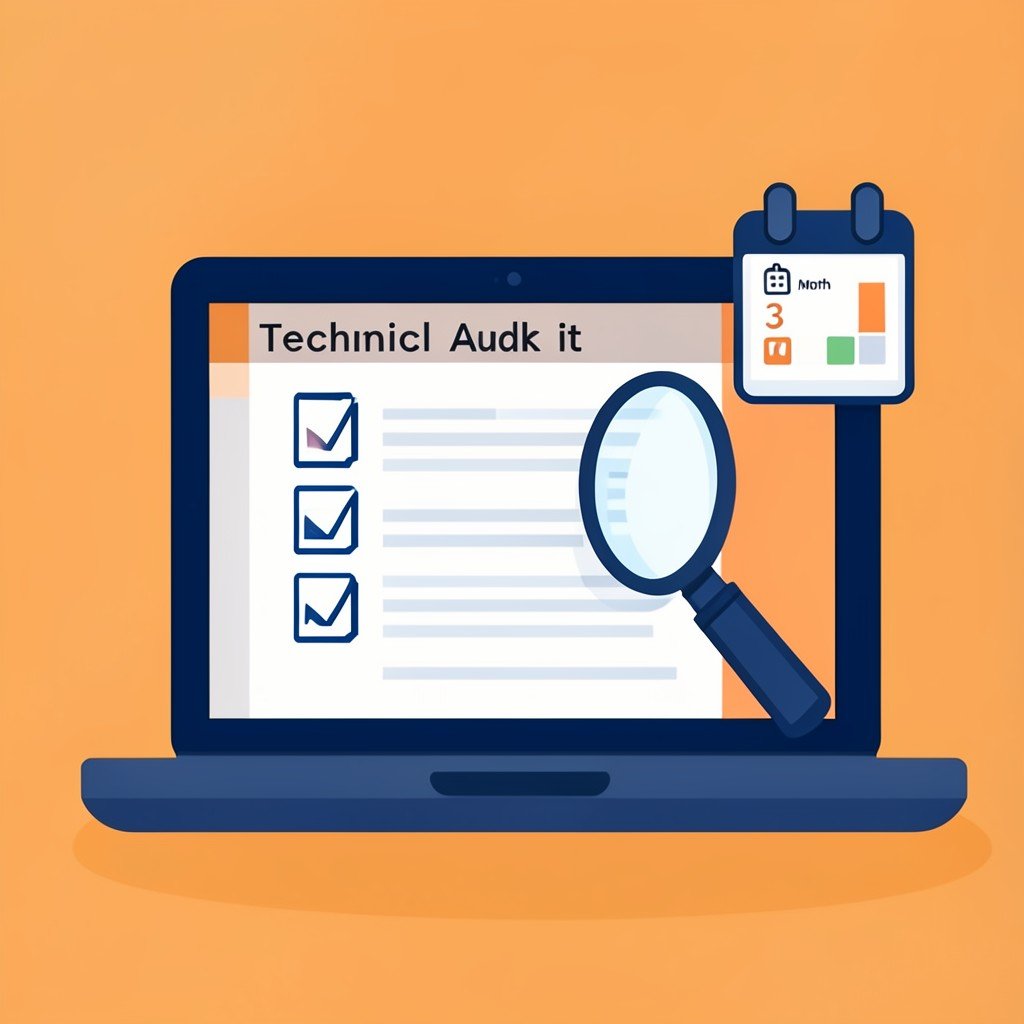
In 2026, professional SEO services have evolved beyond keyword stuffing and backlink schemes. A reputable agency or freelancer now offers a holistic package that includes technical audits, content strategy, on-page optimization, and authority building. Many combine traditional SEO with AI-assisted content creation and structured data implementation to improve visibility in both search results and AI answer engines.
Typical deliverables include:
- A comprehensive site audit covering Core Web Vitals, mobile usability, and crawlability
- Optimization of existing pages for target keywords and user intent
- Creation of new content that answers your customers’ questions
- Earning editorial backlinks from relevant, authoritative sites
- Monthly reporting on rankings, organic traffic, and conversions
One common misconception is that SEO services guarantee specific rankings. Reputable providers explicitly avoid promising page one positions because search algorithms update frequently and competitor actions are unpredictable. Instead, a trustworthy service sets realistic milestones like improving organic traffic by a certain percentage or increasing visibility for priority keywords.
The cost varies widely: monthly retainers for small business SEO services typically range from $1,500 to $5,000, while project-based fees for a one-time audit and strategy run $2,000 to $7,000. Freelancers may charge less, but their capacity and specialization vary. Always ask for case studies and client referrals – and verify them. Small businesses that rush into cheap services often end up with generic templates and zero results.
How Much Could You Save Doing Your Own SEO?
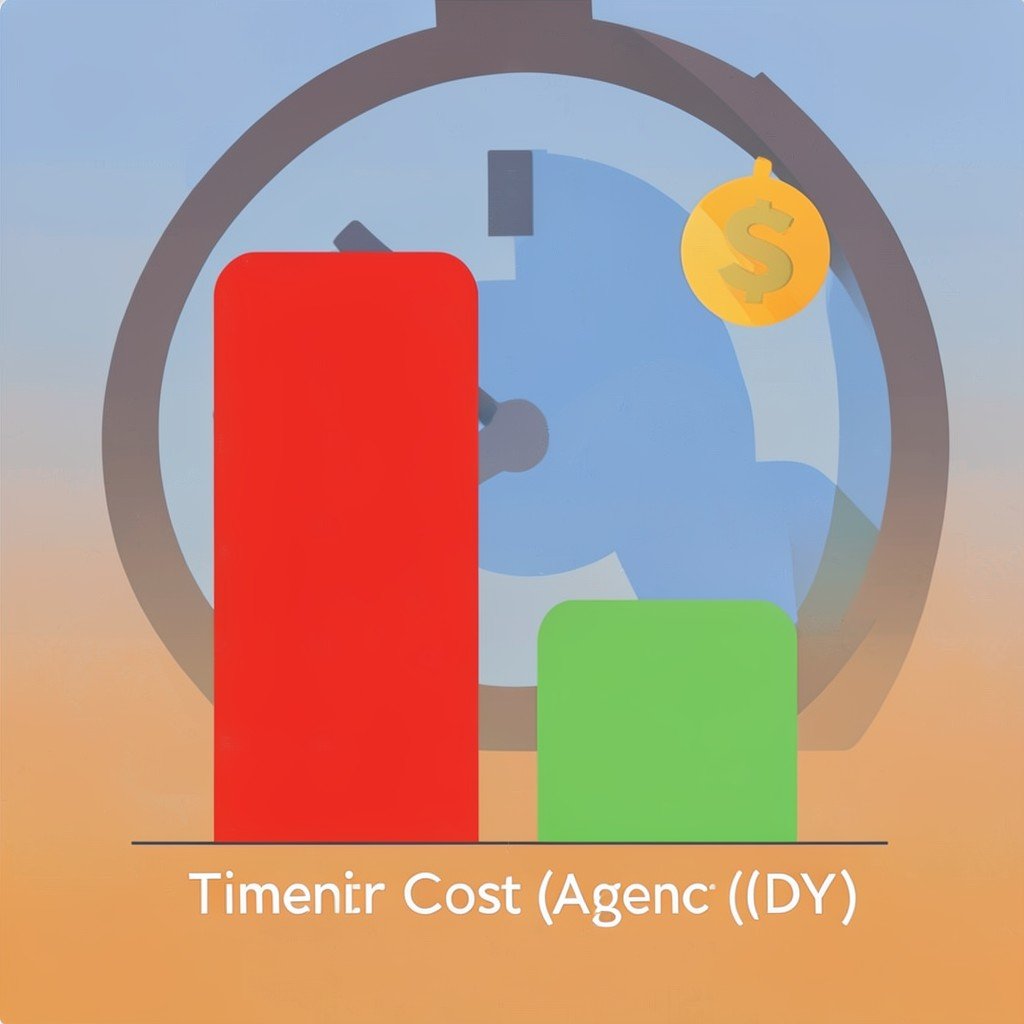
Doing your own SEO eliminates the monthly retainer, but it replaces financial cost with time cost. A small business owner who dedicates even five hours per week to SEO – learning the basics, writing optimized content, and chasing backlinks – is investing roughly 260 hours per year. At a conservative hourly rate of $75 for your own time, that’s an opportunity cost of $19,500. Compared to a $3,000-per-month SEO service, the financial savings may not be as straightforward as they seem.
Beyond time, DIYers need tools to compete. In 2026, essential SEO tools like Ahrefs, Semrush, or Moz Pro cost $100 to $500 per month. You’ll also need a good website platform with SEO plugins, a content management system, and maybe an AI writing assistant. These add up. Many beginners underestimate the learning curve: understanding search intent, technical signals like Core Web Vitals, and link earning takes months of practice.
However, the biggest hidden cost in DIY SEO is mistakes. Common errors include targeting keywords with zero commercial intent, accidentally creating duplicate content, or violating Google’s spam policies (like buying low-quality links). Recovering from a penalty can cost more than a year of professional service fees. Small business owners who do it themselves often find that while they save money upfront, they lose several months of potential growth.
That said, some niches and skill levels make DIY perfectly viable. If you’re a freelance writer, graphic designer, or local service provider with a simple website and hyperlocal competition, you can absolutely rank with consistent effort. The key is being brutally honest about your own bandwidth and patience for ongoing learning.
SEO Services vs. DIY: Which Delivers Faster Results?
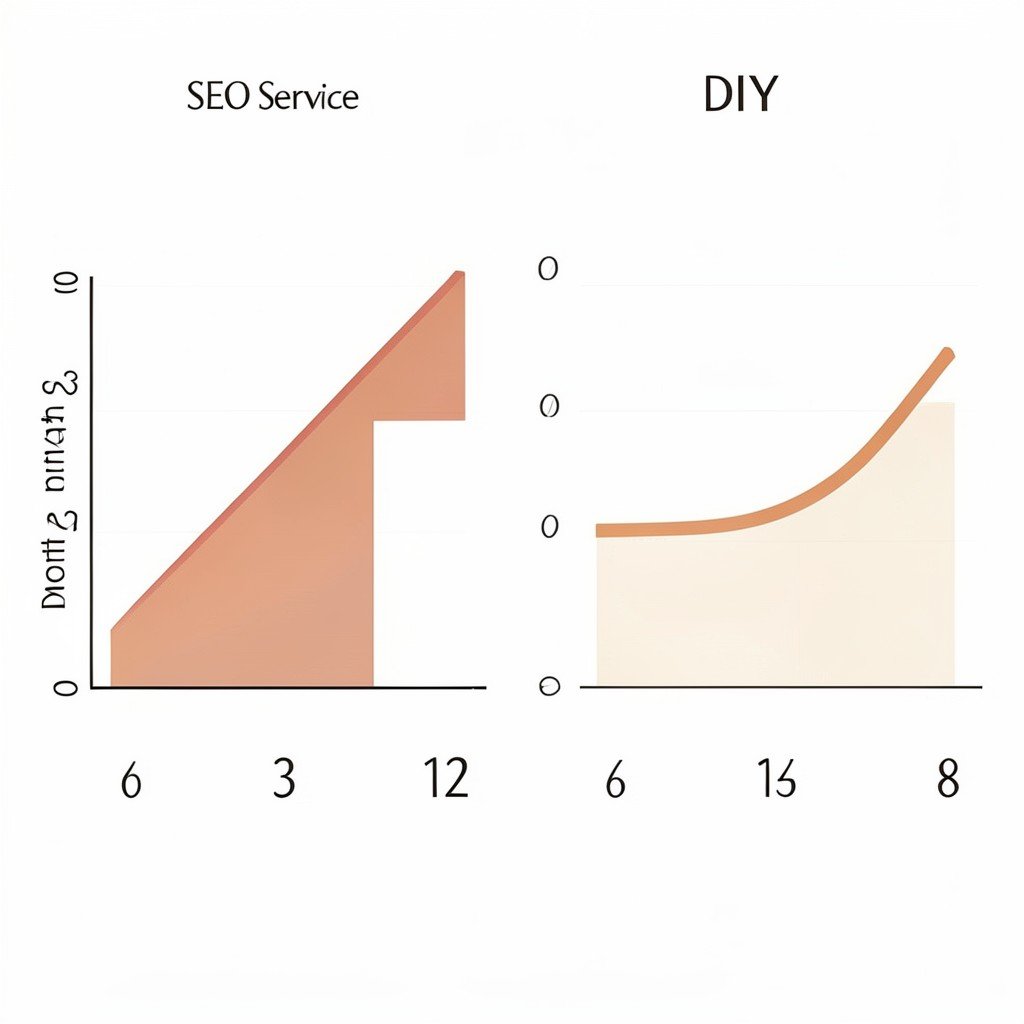
Results timelines differ drastically between the two approaches. A comprehensive SEO service typically starts seeing measurable organic traffic increases within 3 to 6 months, with significant gains appearing around month 9 to 12. That’s because professionals have existing processes, tools, and relationships – they can execute technical fixes immediately, publish optimized content weekly, and earn backlinks from their network. In contrast, a solo business owner often spends the first three months just learning the basics and building a content workflow.
DIY SEO timelines are highly variable. A motivated business owner who already understands basic on-page SEO might see their first ranking improvements in 4 to 6 months. But if you’re starting from scratch – learning keyword research, site structure, and writing for search intent – you could easily spend a year before seeing any meaningful traffic. The lag is often discouraging enough that many abandon SEO before it pays off.
The urgency factor matters. If your business needs revenue growth within the next quarter, hiring SEO services is usually the faster path. Experienced practitioners can bypass the learning curve and get your site technically optimized from day one. They’ll also avoid rookie mistakes that set back timelines, like targeting low-volume keywords or neglecting local SEO signals.
However, faster doesn’t always mean better for long-term sustainability. Services that rely heavily on AI-generated content or link farms may produce quick gains that vanish after the next algorithm update. The safest middle ground is to hire a consultant for the audit and strategy phase, then execute the work yourself – you get expert direction without the full monthly retainer.
What Are the Biggest Risks of Each Approach?
SEO services carry the risk of picking the wrong provider. In 2026, the market is flooded with agencies that promise the world but deliver generic reports, automated link schemes, or AI-written fluff. A bad SEO service can actively harm your site. For example, a provider that builds 50 low-quality directory links in one month might trigger a manual action from Google, tanking your visibility for months. Vetting thoroughly – including checking their own website’s organic footprint – is essential but takes time the average business owner doesn’t have.
DIY SEO risks include technical oversights, algorithm penalties, and simply losing interest. Many business owners start strong, publishing five blog posts in week one, then nothing for two months. Inconsistent effort confuses both users and search engines. Another common DIY mistake is ignoring mobile user experience or page speed, which directly impacts rankings in 2026’s mobile-first indexing environment. Fixing these issues retroactively often requires a developer, negating any cost savings.
There’s also the risk of falling for outdated advice. SEO changes constantly – what worked in 2024 (exact-match domain names, for instance) may hurt you in 2026. DIYers who rely on decade-old blogs or YouTube videos risk implementing tactics that Google now penalizes. Professional SEO services stay current because their business depends on it, though even they can be slow to adapt if they’re stuck in legacy methods.
Finally, opportunity cost is a risk for both paths. Money spent on a mediocre SEO service is money not spent on paid ads, product development, or customer experience. Time spent on DIY SEO is time not spent on sales, client work, or improving your actual product. Before committing, calculate the true cost of each path relative to your other business priorities.
How to Choose Between SEO Services and DIY in 2026
Decision-making starts with an honest audit of your own situation.
- If you have a technical background, enjoy learning algorithms, and can commit at least 10 hours per week to SEO for the next 12 months, DIY is worth trying. You’ll need a good foundation in HTML, content marketing, and analytics.
- Conversely, if your expertise is elsewhere – you’re a plumber, a wedding photographer, or a personal trainer – hiring an SEO service frees you to focus on what you do best while someone else handles the search landscape.
Consider your competition. If your top competitors rank for dozens of commercial keywords with strong domain authority, breaking in without professional help is an uphill battle. A tool like Semrush can show you their backlink profile and content volume – if they’re publishing 20 optimized articles per month and earning links from major industry sites, DIY will be very difficult. If your niche is less competitive, like a hyperlocal service area with only a handful of players, you can absolutely carve out visibility on your own.
Budget is the obvious factor, but look beyond the monthly fee. Compare the cost of a service against the opportunity cost of your time and the potential revenue from faster organic growth. If SEO services can help you gain an extra $10,000 in monthly revenue by month 6 versus month 12, the ROI easily justifies the investment. Many small business owners find that a hybrid approach – spending $500-$1,500 on a consultant for a roadmap – reduces DIY risk and improves speed.
Finally, test the waters before committing. DIYers should start with a single local keyword or service page and see if they can move the needle in three months. If you can’t, consider hiring help. For services, ask for a one-month trial or a limited-scope project like a technical audit. A trustworthy provider will be confident enough in their work to let you sample it. Avoid any service that demands a 12-month contract upfront.
How to Hire SEO Services Without Getting Burned
When you decide to hire SEO services, due diligence is non-negotiable. Start by avoiding anyone who guarantees #1 rankings, uses secret algorithms, or promises results in under 3 months. These are red flags. Instead, look for providers who are transparent about their methods, give realistic timelines, and communicate clearly in plain language. A good SEO service can answer the question “What exactly will you do for this fee?” with specific, understandable steps.
Ask for references from clients in similar industries or business sizes. Then actually call them. Inquire about communication frequency, reporting detail, and whether they saw concrete business results (not just traffic). Many small business owners find that local agencies or boutique freelancers with a track record in their niche outperform large firms that treat small clients as an afterthought. Check the provider’s own website – if it’s slow, hard to navigate, or ranks for nothing, walk away.
Structure the engagement carefully. Start with a paid audit and strategy phase (typically $1,000-$3,000) that delivers a documented roadmap. Only after you see that roadmap and agree on the goals should you move to a monthly retainer for implementation. This protects you from paying for execution that’s based on a flawed strategy. In the contract, include a 30-day exit clause and specify what you own upon termination – content, links, and access to accounts.
Set clear key performance indicators (KPIs) from day one. While rank tracking is common, more meaningful metrics include organic traffic to your highest-priority pages, click-through rates, and conversions from organic search. Schedule monthly check-ins to review progress against benchmarks and adjust tactics. Remember that good SEO services are partners in your business growth, not vendors you set and forget. The relationship works best when you share your goals, audience insights, and feedback regularly.
Conclusion: The Right SEO Path for Your Small Business
The decision between SEO services and DIY ultimately comes down to your time, budget, and competitive landscape. If you can invest consistent effort over 6-12 months and enjoy learning SEO, DIY can save money and build your skills. If your time is better spent on core business activities and you need reliable, faster progress, professional SEO services offer a proven shortcut – provided you choose them carefully. Whichever path you take, SEO in 2026 rewards patience, quality, and a genuine focus on helping your customers find answers to their questions.
Frequently Asked Questions
How much do SEO services cost for a small business in 2026?
Monthly retainers for small business SEO services typically range from $1,500 to $5,000, while one-time projects like audits and strategy cost between $2,000 and $7,000. Prices vary based on competitiveness, scope, and provider expertise.
Can I do SEO myself without any experience?
Yes, but expect a steep learning curve. You’ll need to learn keyword research, technical SEO, content optimization, and link building. Many business owners succeed by starting with one service page or blog post and scaling up gradually over several months.
How long does it take to see results from SEO services?
Most reputable SEO services begin delivering measurable organic traffic improvements within 3 to 6 months. Significant gains typically appear around month 9 to 12, assuming consistent execution and a sound strategy.
What should I look for in an SEO provider in 2026?
Hire providers who are transparent about methods, share realistic timelines, and provide references from clients in your industry. Avoid any service that promises guaranteed rankings, uses black-hat tactics, or demands long-term contracts without a trial period.