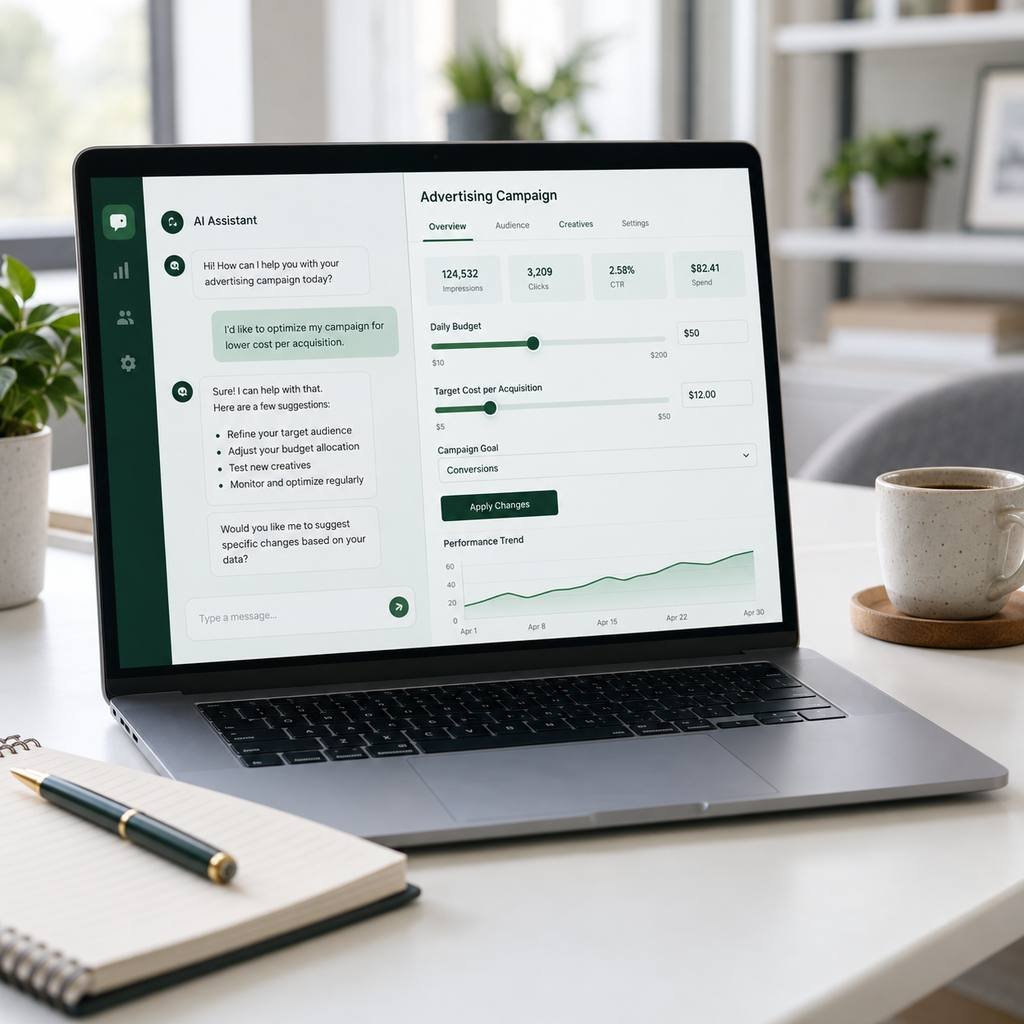
If you advertise on OpenAI’s platform, your ChatGPT Ads bidding setup is on a countdown. According to the official OpenAI Help Center bidding guide, the legacy Max Bid and Max CPC controls retire on January 1, 2027, and Target CPA and Target CPC have already taken over for new campaigns. Here is what changed, what stayed the same, and how to migrate without stalling delivery.
What changed in ChatGPT Ads bidding
Three bidding strategies now define how campaigns run:
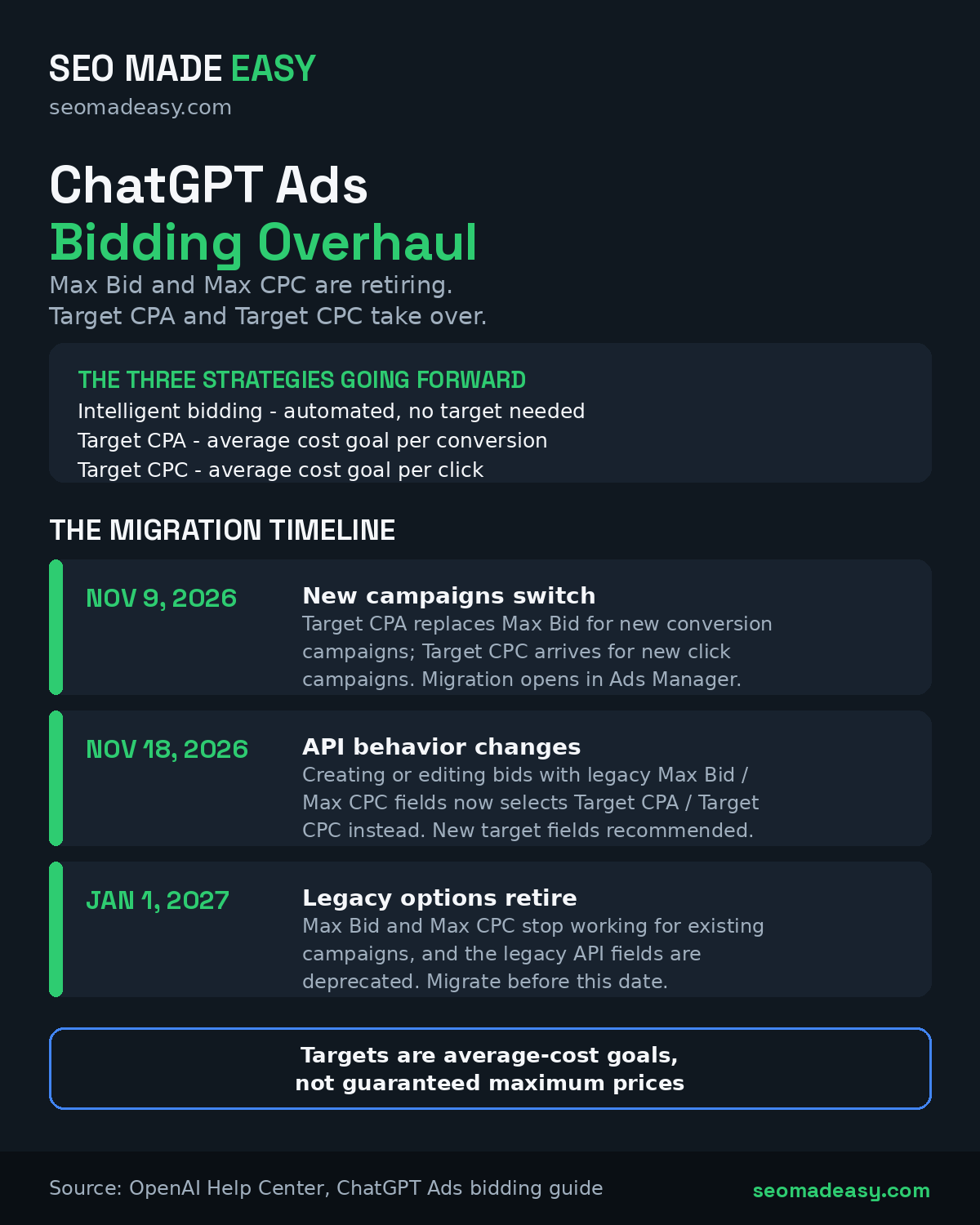
- Intelligent bidding, formerly Maximize Results (Autobid), automatically adjusts bids and delivery toward your business outcome within your budget, with no target to set.
- Target CPA lets you specify the average amount you want to pay per conversion, such as a purchase or lead, while the system manages individual auction bids.
- Target CPC does the same for the average amount you want to pay per click.
Since November 9, 2026, Target CPA has replaced Max Bid for advertisers creating new conversion campaigns, and Target CPC is available for new click campaigns. The older Max Bid and Max CPC options remain as legacy controls for existing campaigns until January 1, 2027, and OpenAI asks advertisers to begin moving campaigns to the new options in Ads Manager.
For API-managed campaigns, dedicated Target CPA and Target CPC fields are being added. Since November 18, 2026, creating a campaign or changing an ad group’s bid type through the legacy Max Bid or Max CPC fields selects Target CPA or Target CPC instead, with submitted values treated as average-cost targets rather than maximum bids. The legacy API fields are deprecated starting January 1, 2027.
How pricing works under the new system
The auction itself has not changed. Eligible ads compete in an auction, and the final winning auction bid sets the price you pay, across every bidding strategy including the legacy ones. What changes is how the system chooses your bids: with Intelligent bidding, Target CPA or Target CPC, it weighs the likelihood of a click or conversion against the price it would pay, guided by your budget and any target cost.
Two details matter for expectations. First, a target is an average-cost goal, not a cap: a $50 Target CPA tells the system to work toward a $50 average, but individual conversions can cost more or less, and the actual average may land above or below the target. Second, your bidding goal and your billing event are separate settings – a campaign can optimize toward conversions while charges are based on clicks or impressions, depending on its billing setting.
How to migrate before January 1, 2027
OpenAI’s guidance for a clean transition:
- Review recent actual costs first. Look at actual CPA for the same conversion event, or actual CPC for a click campaign, over a consistent reporting period, and allow for conversion-reporting delay. A target set below recent performance can restrict delivery.
- Set or adjust the target as the campaign moves. Review spend, results and actual average cost together while the campaign learns on the new strategy.
- Confirm conversion tracking. For conversion campaigns, set up the OpenAI Pixel, Conversions API, or both, select a supported event, and verify real events are arriving. Check the Event Quality Score (EQS) and resolve event-quality warnings – weak or missing signals can reduce delivery and leave budget unspent.
- Review audience bid multipliers. Where available, a multiplier applies on top of the base target: a $50 Target CPA with a 1.2x new-customer multiplier gives that segment a $60 target, still as an average-cost goal.
- Update API integrations. Partners should switch to the new target fields before January 1, 2027.
A campaign may not spend its full budget if targets are too restrictive, eligible opportunities are limited, or conversion signals are weak – so treat migration as a tuning exercise, not a copy-paste of old bid caps. The same pattern is playing out across the industry: Microsoft Advertising rebuilt its automated bidding models this month, and our coverage of that upgrade shows how similar the guidance is. If you are weighing AI platforms as ad channels, our earlier piece on ChatGPT Wallet covers the commerce side of OpenAI’s platform.
Availability and what this means for advertisers
The bidding change applies to ChatGPT Ads campaigns generally – OpenAI’s documentation names no regional restriction for the transition itself, so advertisers running ChatGPT Ads from the US, UK, India, Dubai or the Gulf follow the same November-to-January migration window. The practical takeaway is universal: accounts that keep legacy Max Bid or Max CPC campaigns untouched into 2027 will need to move them, and doing it early leaves time for the system to learn before the deadline.
Frequently Asked Questions
When do Max Bid and Max CPC retire in ChatGPT Ads?
January 1, 2027 for existing campaigns. New conversion and click campaigns already use Target CPA and Target CPC since November 9, 2026, and the legacy API fields are deprecated starting January 1, 2027.
Does Target CPA mean I am billed per conversion?
No. Your bidding goal and billing event are separate settings. A campaign can optimize toward conversions while charges are based on clicks or impressions, depending on its billing setting.
Is a Target CPA or Target CPC a guaranteed maximum cost?
No. Both are average-cost goals that guide the system’s auction bids. Actual average costs can be higher or lower than your target, and individual conversions or clicks can cost different amounts.
How do I choose a realistic Target CPA?
Start from your recent actual CPA for the same conversion event over a consistent reporting period, allowing for conversion-reporting delay, and compare it with what the outcome is worth to your business. Setting a target far below recent performance can restrict delivery and leave budget unspent.
Sources: OpenAI Help Center: Bidding strategies and how pricing works in ChatGPT Ads (accessed November 22, 2026); Search Engine Land coverage (November 12, 2026).
1 Comment