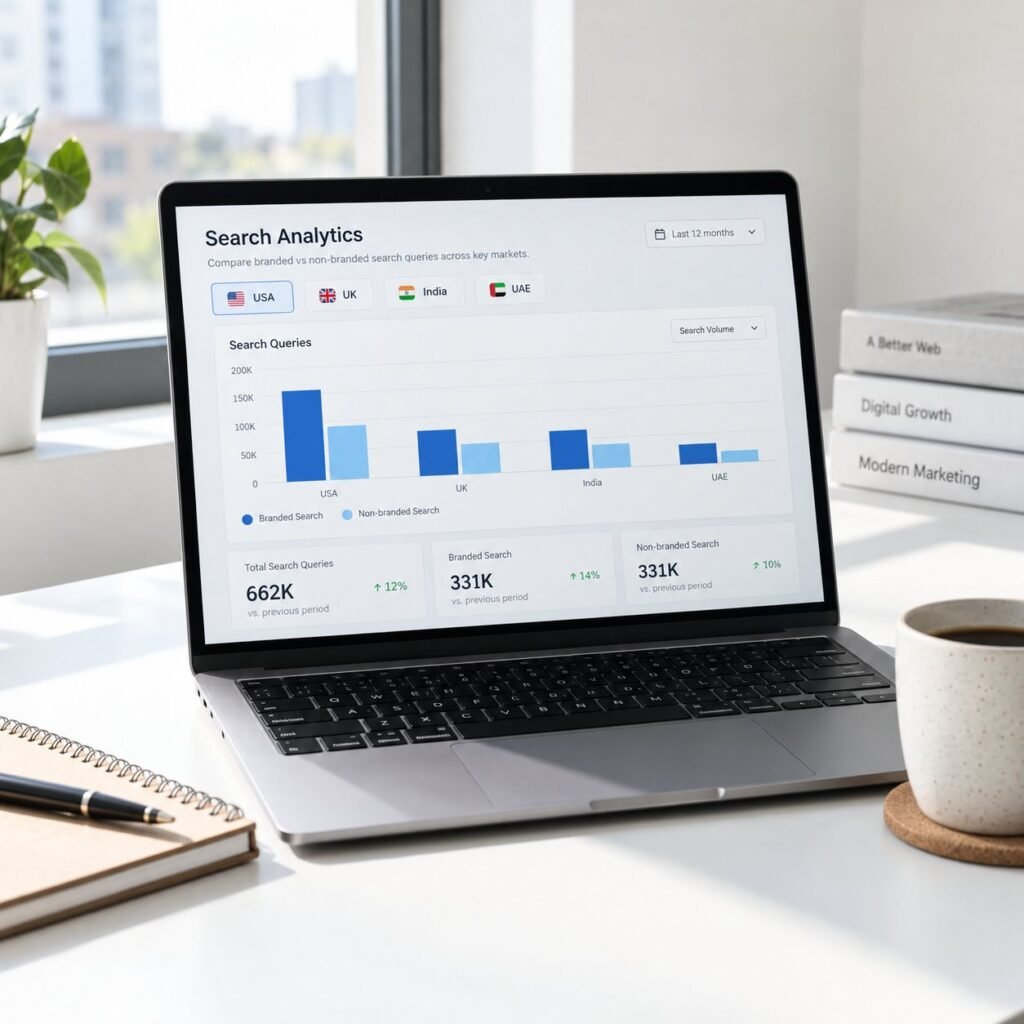
Google has announced a Search Analytics API update that brings three reporting capabilities to developers’ dashboards for the first time: branded query classification, web multimodal search data and filters that accept several countries or devices in one request. The announcement on the Google Search Central Blog, dated November 16, 2026, says the additions follow “ecosystem requests to make this data available for custom reporting and automated workflows.”
For anyone who tracks search performance outside the Search Console interface – agencies, international brands and the third-party tools they rely on – this closes a gap of up to a year, during which these filters existed in the Performance report but not in the API that feeds automated reporting.
What changed in this Search Analytics API update
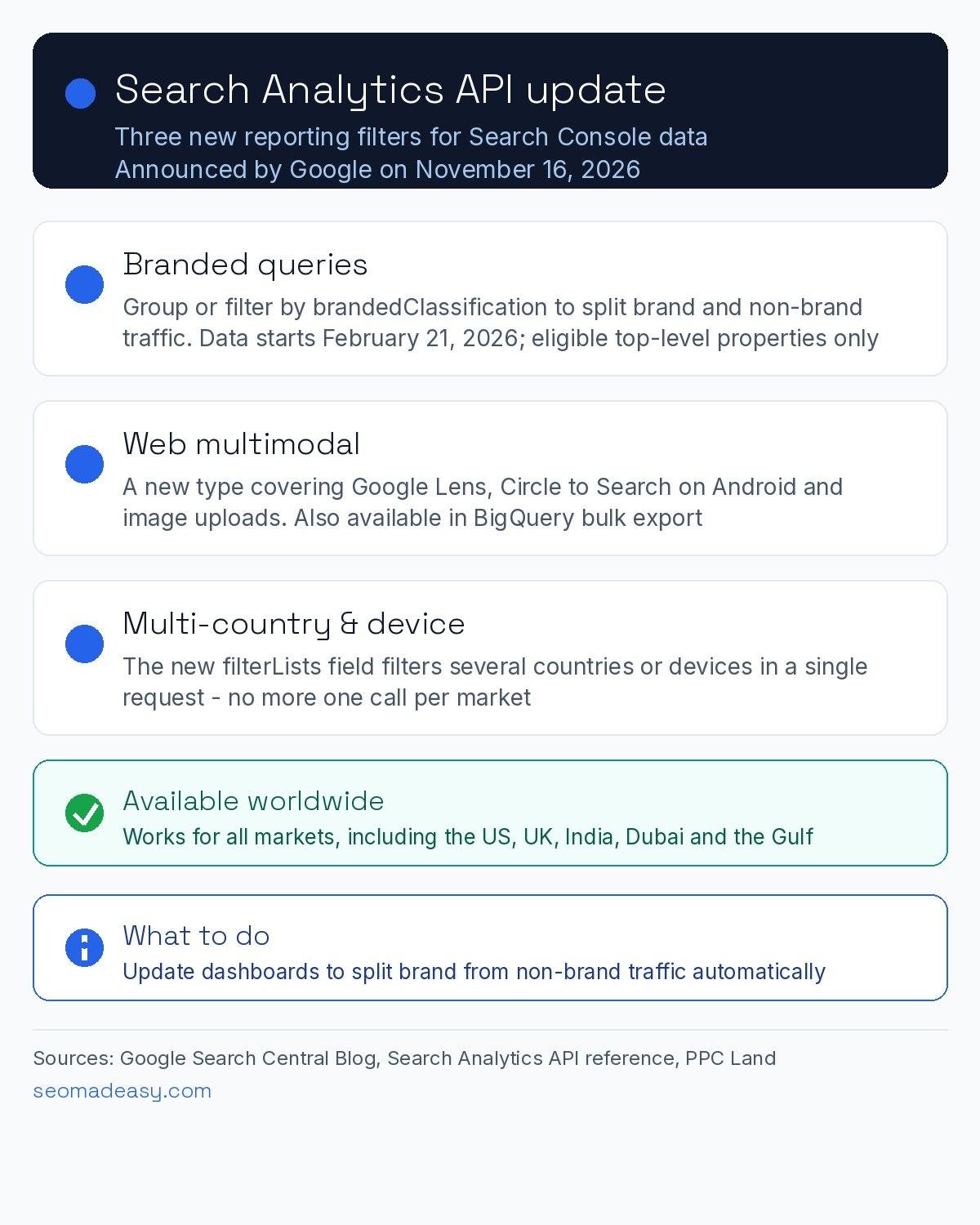
The update touches a single method, searchanalytics.query, which answers a POST request with rows of clicks, impressions, click-through rate and average position. Three options were added, and all three work together, so you can slice the data further – for example, monitoring brand growth across specific regional hubs or checking which pages perform best in multimodal search across key markets and devices, as Google puts it.
1. Branded and non-branded queries
Requests can now group or filter by brandedClassification to compare branded and non-branded performance, replacing the hand-maintained keyword regex lists most teams used for this. According to the Search Analytics API reference, the details matter:
- Supported values are
BRANDEDandNON_BRANDED, and filtering supports only the “equals” operator. - Grouping or filtering by branded classification cannot be combined with a query filter in the same request.
- Data is available starting February 21, 2026, and only for top-level properties with sufficient query and impression volume. For other properties, the response simply will not include these rows.
2. Web multimodal search
Setting the type parameter to webMultimodal returns performance data from Google Lens, Circle to Search on Android and image uploads in Google Search. This data will also be available in BigQuery for properties with an active bulk data export.
That gives site owners a measurable view of visual search for the first time, at a moment when visual and AI-led discovery keep growing – a shift we covered in our GEO guide on how pages get into AI answers.
3. Multi-country and multi-device filters
A new filterLists field filters by several countries or devices in a single request. Instead of stitching together separate requests per market, you can now query a group of countries – Google’s examples are EMEA, LATAM and DACH – and device combinations in one API call. For the supported values and combinations, Google points to the API documentation.
Who this helps
Google names site owners, international businesses and third-party tool builders. In practice, anyone piping Search Console figures into a dashboard or monitoring workflow benefits: brand growth can be tracked per region without regex maintenance, and multimodal performance can sit alongside classic web search in the same reports. The API’s existing row cap per request still applies, so very large exports will continue to paginate, PPC Land notes.
Availability
Google has announced no regional restrictions: the new options are part of the public API and work for Search Console properties worldwide, including the US, UK, India, Dubai and the wider Gulf. The only eligibility limit is the branded classification, which depends on your property’s volume rather than its location.
What to do now
- Check the reference. The updated searchanalytics.query reference lists the new fields, supported values and combinations.
- Watch your SEO tools. Third-party dashboards and reporting tools pull from this API, so expect them to add branded and multimodal breakdowns; ask your vendor if you do not see them.
- Split brand from non-brand before judging traffic. With the November 2026 core update still settling, a branded or non-branded split tells you far more than a single traffic line.
Sources: Google Search Central Blog: New filtering and reporting capabilities in the Search Analytics API, November 16, 2026; Search Analytics API reference: searchanalytics.query; PPC Land, November 16, 2026; Search Engine Land, November 16, 2026.